
The Galápagos Islands: Where Nature Still Leads
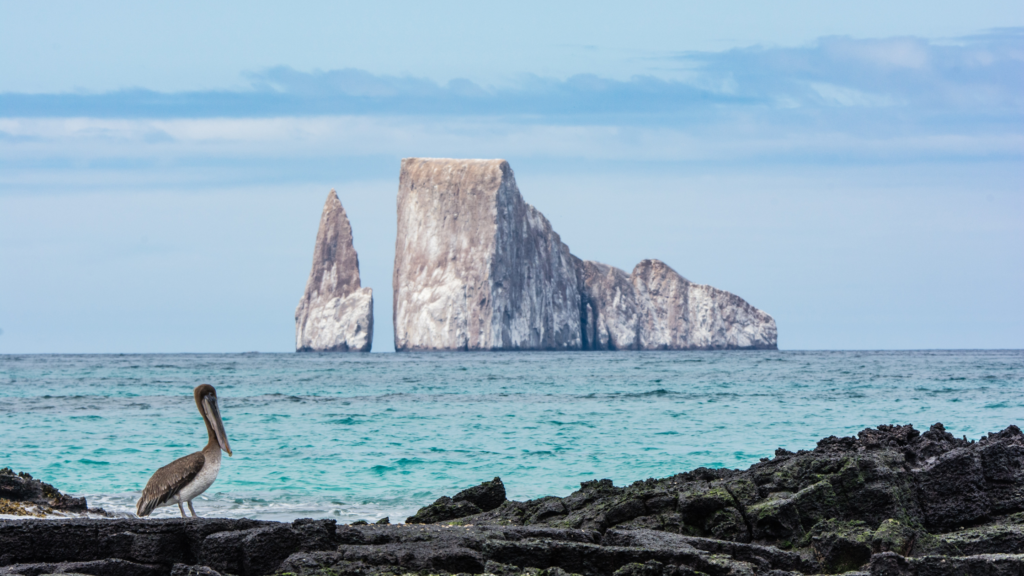
There are very few places left in the world where nature still feels in charge.
The Galápagos Islands are one of them—and a true bucket list destination for anyone drawn to wildlife, remote travel, and untouched natural environments.
What makes them unforgettable isn’t just the wildlife. It’s the feeling of stepping into a place that was never built for you, yet allows you to observe it on its own terms.
Wildlife That Lives Without Fear
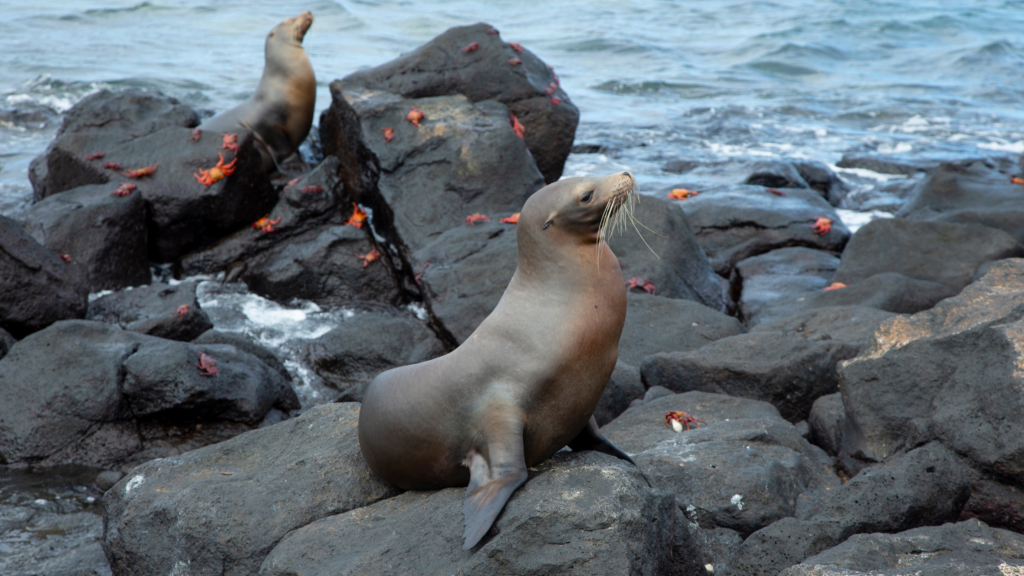
One of the first things you notice in the Galápagos Islands is how close everything feels.
Sea lions rest across docks as if they’ve always belonged there. Marine iguanas stretch across volcanic rock and walking paths, unmoved by passing footsteps. Giant tortoises move slowly through the highlands, steady and unbothered, as if time has very little to do with them.
Nothing here performs. Nothing here reacts to you.
That’s not coincidence—it’s protection. Strict conservation laws mean humans are visitors here, and wildlife has learned there is no need to respond to us. You don’t interact with animals in the Galápagos. You witness them, quietly, as they are.
And that shifts something fundamental in how you experience wildlife travel.
Water, Light, and the Shape of the Islands
The ocean changes with the land in ways you start to notice only after slowing down.
In the Galápagos Islands, water isn’t one color. It’s layered. Soft turquoise in shallow bays, deep indigo where the seafloor drops away, and everything in between shaped by what sits beneath it.
Volcanic soil, coral sand, and dark lava rock all influence how the water reads against the shore. Nothing is uniform here. Everything is responsive.
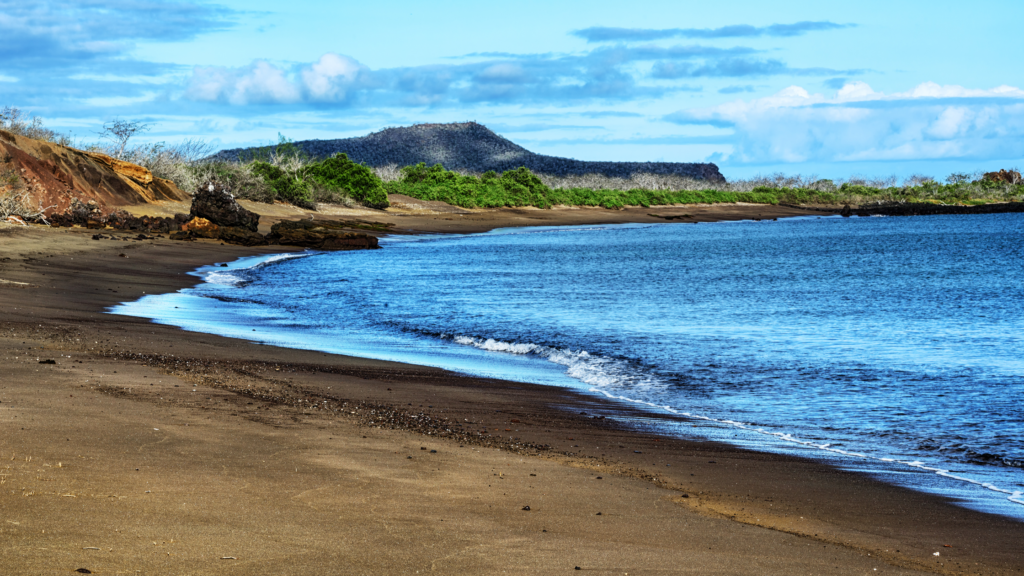
On black sand beaches like those on Floreana Island, the contrast is striking. Dark volcanic sand meets crystal-clear water, and suddenly every detail sharpens. Light flickers across the surface in small, scattered bursts—white against black earth, constant motion against stillness.
Snorkeling here isn’t an activity you check off. It’s a shift in perspective.
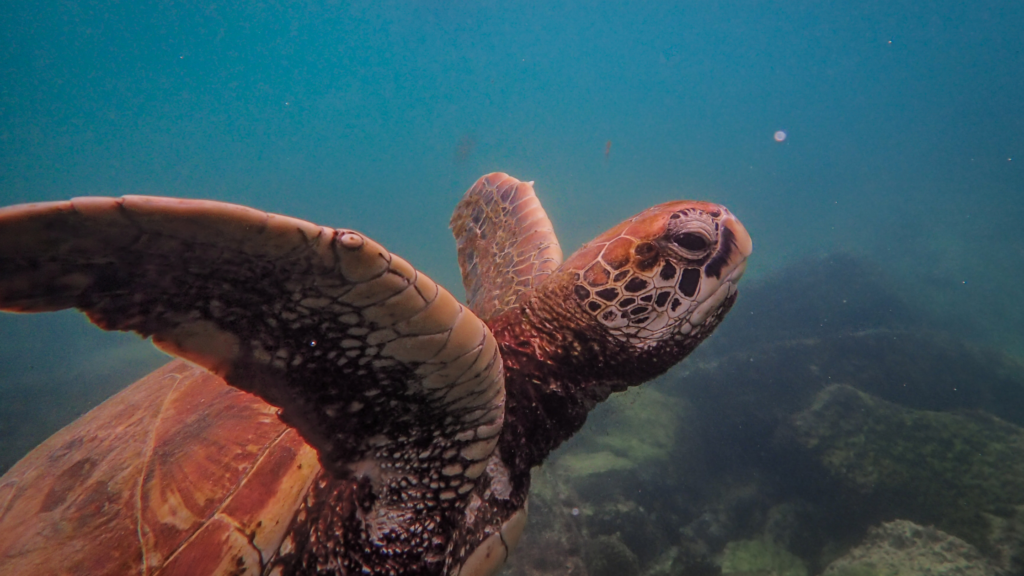
Sea turtles move past without urgency. Reef sharks trace quiet lines along the seabed. Schools of fish turn in coordinated motion that feels intentional, even when it isn’t.
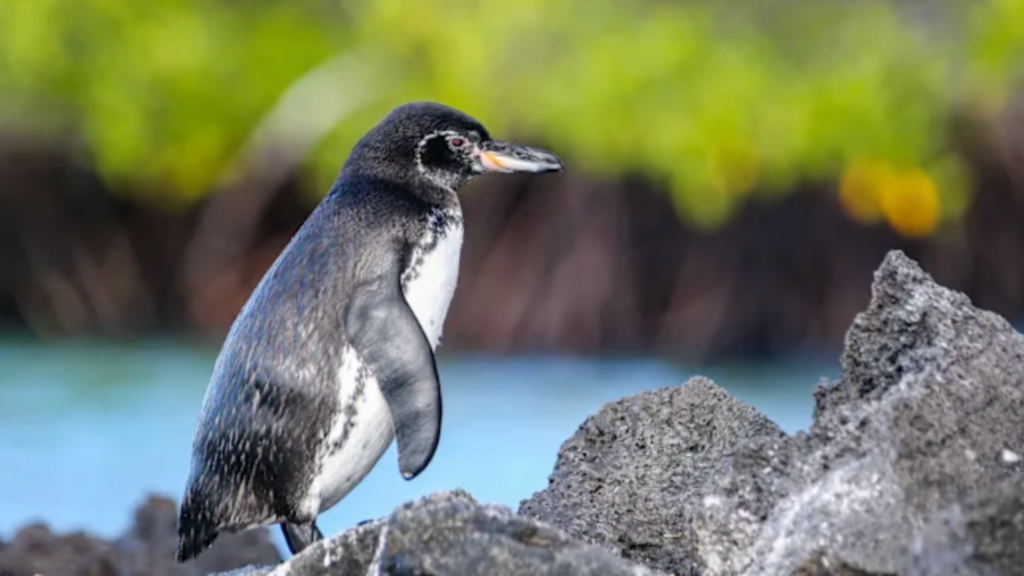
And then, unexpectedly, a Galápagos penguin cuts through it all—fast, precise, completely at ease in tropical water.
In moments like that, it doesn’t feel like you’re observing wildlife in the Galápagos Islands.
It feels like you’ve been briefly allowed into it.
Moments You Don’t Plan for
Some of the strongest memories here happen without warning.
While snorkeling, our guide suddenly stopped us. He had heard something none of us had noticed—a faint call beneath the surface sound.
Within minutes, he found them. Penguins, feeding nearby.
We would have swum right past without him.
That’s what becomes clear quickly in the Galápagos: guides don’t just lead you through space, they tune you into what the environment is already doing. And that changes everything you think you’re there to see.
A Sense of Discovery That Still Exists
Each island feels distinct.
Different terrain. Different light. Different energy entirely.
It’s not hard to imagine what early explorers must have felt arriving here for the first time, moving from one shoreline to the next without knowing what would appear. That sense of discovery still lingers—not because the islands are unknown, but because they remain deeply intact.
You don’t feel like you’re discovering the Galápagos.
You feel like you’re being allowed to witness something that exists without you.
When to Visit the Galápagos Islands
The Galápagos Islands are a year-round destination, but timing shapes the experience in subtle ways.
December to May (Warmer Season)
The water is warmer, the seas are calmer, and visibility for snorkeling is excellent. Landscapes are greener, and marine life is especially active in shallow waters.
June to November (Cooler Season)
Cooler waters bring nutrient-rich currents that attract larger marine life and more dynamic ocean activity. This is also the best time for sightings of migrating humpback whale (typically June through September), along with frequent dolphin encounters.
There is no wrong season—only different expressions of the same place.
How to Experience the Galápagos Islands
How you travel here matters more than most destinations.
Some travelers choose land-based, active itineraries—moving between islands with hiking, snorkeling, and full days outdoors. It’s immersive and physical, but also more rugged in rhythm.
Others explore by small expedition ships, typically under 100 guests, moving between islands with guided landings and structured wildlife encounters. These journeys offer access to more remote areas with a slower, more supported flow.
There are also hybrid itineraries that combine time on land with time at sea, balancing activity with comfort.
None of these approaches is inherently better. The right choice depends on how you want to move through nature—closely, actively, or with more ease.
Final Thoughts
The Galápagos Islands are not just a destination you visit.
They are one of the world’s great bucket list wildlife destinations—not because they are difficult to reach, but because they still feel intact.
What stays with you isn’t just what you see—it’s how it feels to exist, briefly, in a place where nature still leads entirely on its own terms.
Sea lions resting without concern, marine iguanas stretched across volcanic rock, and the slow, ancient presence of giant tortoises moving through the highlands all stay with you long after you’ve left. Even the birds leave an impression—the unmistakable blue-footed boobies standing quietly on black lava stone, completely unbothered by the world around them.
And there is so much more here than I can fully capture in one piece—the depth of wildlife, the differences between islands, and those unexpected moments that don’t always make it into a story but absolutely define the experience.
That’s part of what makes this place so extraordinary.

It’s not just what you see while you’re there—it’s how much there still is to discover.
If the Galápagos Islands have been sitting quietly on your bucket list—or if they’ve just made their way there—this is your sign.
Get in touch with me and let’s start shaping it properly. This is one of those rare destinations that deserves to be done right—and I’d love to help you make it happen.
And once you’ve experienced it, you don’t quite see the natural world the same way again.

Discover a world of luxury travel inspiration, curated for the soul. From expert planning tips and personal stories to behind-the-scenes insights, this is your destination for inspiration, advice, and everything that makes travel magical.
welcome to the
Sol Kiss Escapes Blog
Luxury Escapes
Travel Tips & Planning
Mindful Travel
Spiritual Escapes
Luxury Train Journeys
FREE guide
The cabins worth booking and the mistakes to avoid: my insider's edit to the world's most legendary train journeys.


